
1. The Call of the River — The Sister of Ganga
There’s something about rivers in India that makes you emotional even before you see them. Maybe it’s how everyone calls them Maa — mother. Growing up, I’d hear people say “Yamuna cleanses fear” and “Ganga washes away sin.” Honestly, I never really understood those lines. They were just background poetry
But now, as I packed for my trip to Yamunotri — the very birthplace of the Yamuna — something inside me stirred. Maybe it was curiosity. Maybe faith. Or maybe just exhaustion from city life. Whatever it was, it felt like she — Yamuna Maiya — was calling.
Yamuna, they say, is the daughter of Surya, the Sun, and sister of Yama, the Lord of Death. Which kind of makes sense when you think about it — light and darkness, life and death. But Yamuna stands for compassion, the warmth that makes even fate gentle.
I’d already been to Gangotri the previous year, so this felt like the next chapter of a quiet promise I’d made to myself — to visit all four dhams at least once in this life. But Yamunotri wasn’t a plan. It was more like… I don’t know, a whisper.
The morning I left home, my mother gave me a silver coin wrapped in red cloth. “For Yamuna Maiya,” she said softly. That little thing felt heavier than my backpack.
2. The Road That Smells Like Faith
I started from Rishikesh — because honestly, where else? Every road to the Char Dham begins there.
The jeep was old, rattling and coughing its way up the mountains, but the driver, an old man named Devraj, drove like he was talking to the hills. At every turn, he muttered, “Jai Yamuna Maiya.” It wasn’t dramatic. It was like breathing.
We stopped for chai near a small village — one of those tiny places where the tea tastes like smoke and sugar and mountain air mixed together. A boy, maybe 12, asked where I was headed. When I said “Yamunotri,” he smiled and said, “Woh toh maa ka ghar hai.” That line stuck.
The road from Barkot to Hanuman Chatti was rough — steep, narrow, with cliffs that made your stomach drop if you looked too long. But it was beautiful too — apple orchards, pine forests, waterfalls suddenly appearing out of nowhere. You can’t really describe those moments without feeling small.
Somewhere around a bend, I saw her — the Yamuna, just a silver line cutting through rock. So quiet. So alive. My driver said, “That’s her, still a child here.” I didn’t reply. I just kept watching till she disappeared behind a bend.
By evening, we reached Hanuman Chatti — a little mountain village full of pilgrims, mules, temple bells, and the smell of rain and hot pakoras. I remember thinking, This is it. The road ends here. The rest, I’ll have to walk.
3. Hanuman Chatti & Janki Chatti — The Last Warmth Before the Climb
Hanuman Chatti has a strange kind of peace. It’s noisy, yes — with people shouting, mules clopping on stones, and vendors selling raincoats and prasad — but underneath all that, there’s a silence. A spiritual kind.
They say Lord Hanuman rested here once, carrying the Sanjeevani mountain. And if you sit quietly for a minute, you feel that power. Not mythical — more like steady, protective energy.
I stayed the night at a small guesthouse. The owner, an old lady named Shanta Devi, served me steaming rajma-chawal and kept saying, “Kal subah jaldi nikalna beta, upar thand zyada hai.” She mothered every pilgrim like we were her own kids.
The next morning, I started walking toward Janki Chatti — about 8 km away. The air grew thinner, colder. My breath came out in little clouds. Kids sold apples on the roadside, women were knitting sweaters, and an old man gave me a walking stick saying, “Free hai, bas dua karna maa se.”
By the time I reached Janki Chatti, it started to drizzle — just a light mist, but it made the mountains glow. The smell of chai, wet soil, and fried jalebis mixed in the air. I remember just standing there thinking, I’m actually here. Tomorrow, I’ll see where the Yamuna begins.
I was excited and scared. Not scared of the climb — but of what I might feel at the top.
4. The Trek — Steps of Faith, Breath of Prayer
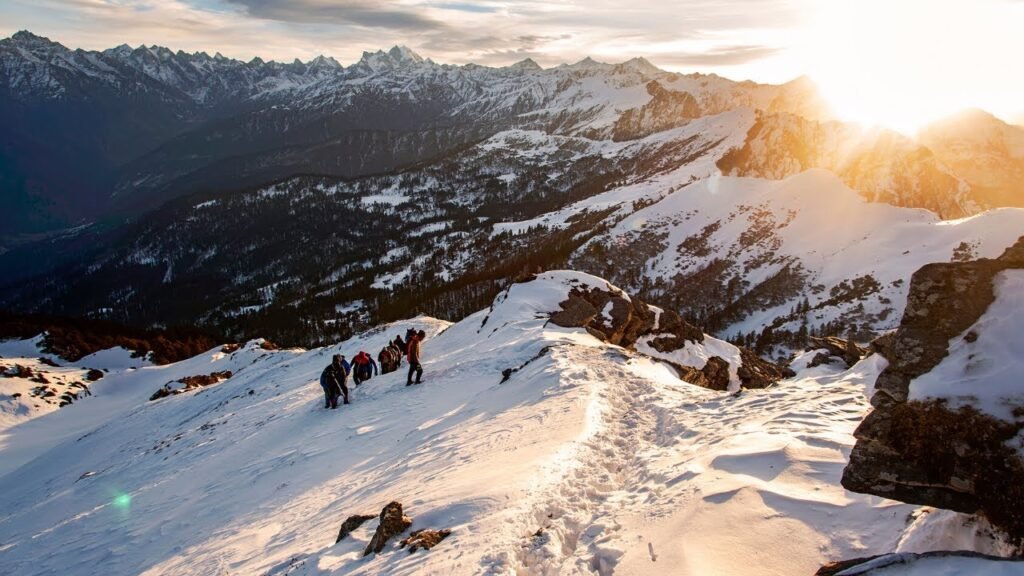
The trek from Janki Chatti to Yamunotri is only 6 km, but I swear, it feels longer. Maybe because each step feels like it’s testing your heart.
The path winds up through thick forest, waterfalls, and tiny shrines built into rocks. Somewhere after the first kilometer, I was already panting. A kind old woman passing by smiled and said, “Maa ka raasta asaan nahi hota.” I laughed, but it was true.
Every few turns, I’d stop just to breathe, or pretend to click photos while secretly resting. There were mules carrying people, groups singing bhajans, and a few solo trekkers like me walking quietly, lost in thought.
At Phool Chatti, I stopped for tea. The place was peaceful — an ashram by the river, smoke rising from a small kitchen, a sadhu meditating under a tree. I don’t know what it was, but sitting there, I felt my mind slowing down.
The last part of the trek was the hardest. The air turned icy, the sound of the Yamuna grew louder, and prayer flags appeared in the wind. I could hear people chanting “Jai Yamuna Maiya” from somewhere ahead, and suddenly, tears filled my eyes for no reason at all.
By the time I saw the first glimpse of the temple flag fluttering above the cliffs, I wasn’t walking anymore. I was being pulled — like something invisible was carrying me forward.

5. The Arrival — Where Fire Meets Ice
Nothing — absolutely nothing — prepares you for the first sight of Yamunotri Temple.
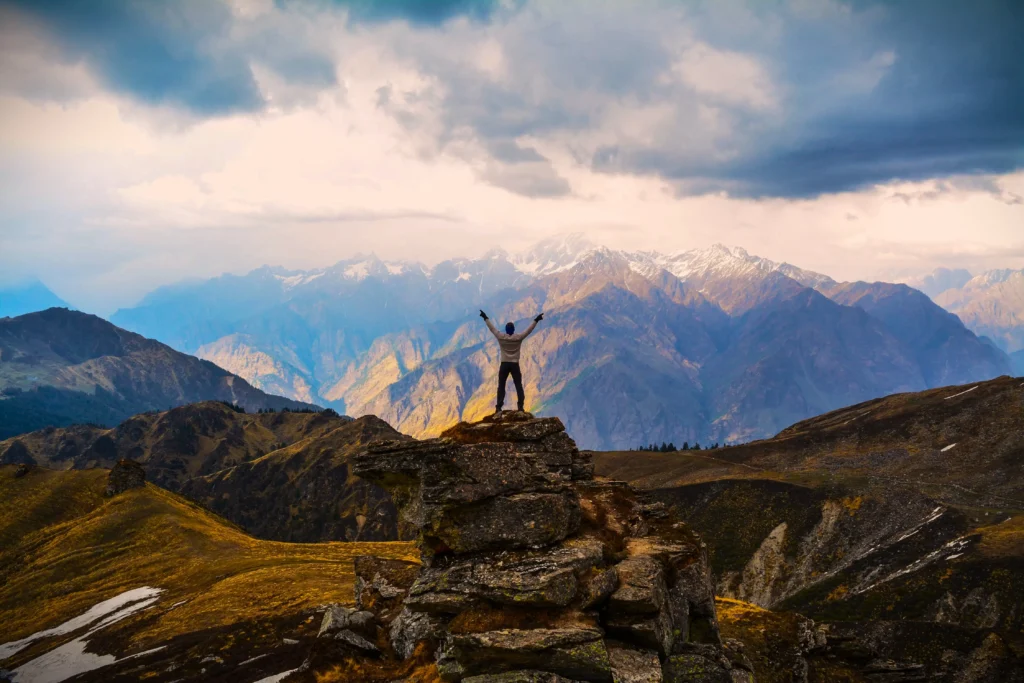
It stands quietly at 10,800 ft, surrounded by snow-capped peaks that look like gods watching from above. The air is so thin, it almost hums. The temple itself isn’t huge or ornate, but the energy around it is powerful — like the air itself is chanting.
At the entrance is Divya Shila, a warm stone where pilgrims offer prayers before entering. When I touched it, it felt like holding someone’s heartbeat.
Behind the temple, the Yamuna roars — clear, cold, furious. And right beside it, steam rises from Surya Kund, the natural hot spring. Imagine that: freezing glacier water next to boiling spring water. Fire and ice. Father and daughter. It’s divine irony at its best.
I joined the others cooking rice tied in small cloths in the hot spring — it cooks in minutes and becomes prasad. The priest smiled and said, “Maa khud banati hain.” I’ll never forget that line.
Inside, Maa Yamuna’s idol glowed silver and gold. I folded my hands and tried to pray, but words failed. My eyes just filled up. There’s something about high-altitude silence that cracks you open. It’s like your soul recognizes home.
6. Fire and Water — The Lesson Hidden in the Steam
Later, sitting by the Surya Kund, I dipped one hand in the hot water, the other in the cold Yamuna. The contrast almost stung, but it also made me smile. Warmth and chill. Comfort and discipline. Faith and struggle. That’s life, isn’t it?
A priest sitting nearby told me, “Surya Dev gave his warmth to Yamuna so she could bring light even in fear.” I nodded. The philosophy was simple — balance.
Nearby, I met a woman from Kharsali Village, where Yamuna’s idol is kept during the winters. She offered me prasad — a small handful of sweet rice wrapped in a leaf. Her hands were rough, her eyes kind. “Maa sab dekh rahi hai,” she said softly. That line hit different.
Before leaving, I looked up at the peaks again — white, endless, peaceful. The wind howled, but it didn’t feel cold anymore. It felt… alive.
7. Evening Aarti — When the Valley Glows
By evening, the temple lit up with tiny diyas. The priest lifted a brass lamp, and the flames reflected off the Yamuna’s surface like hundreds of suns.
The sound of conch shells filled the valley, echoing off the cliffs. I could feel goosebumps all over. People stood shoulder to shoulder — tired porters, locals, travelers — everyone humming the same chant: “Jai Yamuna Maiya.”
I don’t know if it was the altitude, the light, or the emotion, but I cried quietly. Not out of sadness — just pure peace.
As night fell, I sat near the river for a long time, watching the diyas float away. It wasn’t dark. The whole valley glowed like faith itself had caught fire.
8. The Return — Down the Mountain, Up the Heart
The next morning, mist wrapped everything in silver. The mules clinked their bells, the sun peeked shyly, and I began the descent.
Funny thing — the way up felt like effort; the way down felt like gratitude. Every step down was lighter. I stopped often — for chai, for photos, for no reason at all.
Back at Janki Chatti, a group of kids waved at me. Someone offered me tea again. My legs were sore, but my heart… it was quiet in a way it hadn’t been for years.
I realized something simple: I came looking for strength, but Yamuna taught me softness. I thought I was going to see a river. But she made me see myself.

9. What Yamuna Taught Me
It’s hard to explain Yamunotri in words. You don’t “visit” it — you feel it.
Yamuna isn’t loud like Ganga. She doesn’t roar — she whispers.
I think that’s her greatest lesson: you can be calm like water and still carry the warmth of the sun. You can flow, bend, forgive, and still be strong.
Even now, sometimes when I close my eyes, I can hear her voice — not rushing water, but a quiet hum somewhere deep inside.
“I went seeking the source of the Yamuna, but she flowed into me — reminding me that divinity isn’t found, it’s felt.”
Travel Notes
Best time: May to October
Altitude: 10,800 ft
Trek: 6 km from Janki Chatti
Route: Haridwar → Rishikesh → Barkot → Hanuman Chatti → Janki Chatti → Yamunotri
Stay: GMVN guesthouses, small mountain lodges
Tip: Carry rain gear, and respect the silence — it’s part of the prayer.
Eco note: Don’t litter. The river is watching.

A Verse for Her
Namami Yamunamaham sakal siddhi hetum,
Muda murari pad pankaj seva priyetam.
“I bow to you, O holy Yamuna, giver of every blessing, beloved of the Lord whose feet bloom with lotuses.”
Jai Yamuna Maiya. Har Har Mahadev. Om Suryaputri Namah.
If you loved reading about this yatra you might also like Gangotri Yatra.